
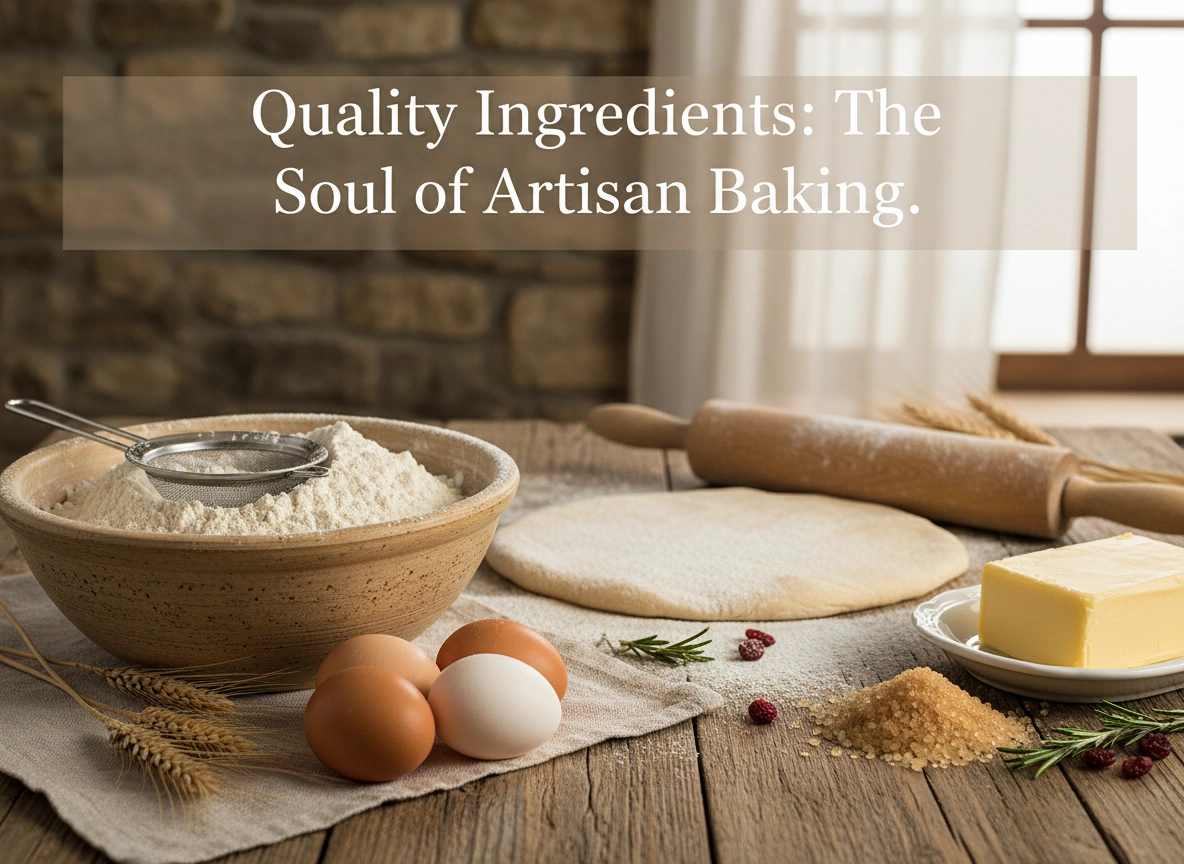
A truly exceptional loaf of bread or a perfectly flaky croissant offers more than just sustenance; it provides a memorable experience. The secret behind these delightful creations isn’t just a skilled baker’s technique—it’s the very heart of the product: the ingredients. In artisan baking, where tradition, craftsmanship, and flavor converge, the quality of each component is paramount. Understanding this principle is what separates a good baked good from an unforgettable one.
This article explores the fundamental role that high-quality ingredients play in the world of artisan baking. We will define what makes this craft unique, analyze how superior ingredients directly influence flavor and texture, and discuss the benefits of sourcing locally. By the end, you will see why investing in quality is the most important step in any baking journey.
What is Artisan Baking?
Artisan baking is a philosophy rooted in tradition and craftsmanship. Unlike mass-produced commercial baking, which prioritizes speed and uniformity, artisan baking is about process, patience, and attention to detail. It involves time-honored techniques, such as natural fermentation with sourdough starters, long proofing times, and shaping by hand.
The core characteristics of artisan baking include:
- Minimalism: Using a short list of simple, high-quality ingredients.
- Patience: Allowing doughs to develop slowly to build complex flavors and textures.
- Hand-Craftsmanship: Relying on the baker’s skill and intuition rather than automated machinery.
- Uniqueness: Embracing the slight variations that make each loaf or pastry a one-of-a-kind creation.
This hands-on approach means the baker is intimately connected with the dough at every stage. Because there are no artificial additives or preservatives to mask imperfections, the quality of the raw materials shines through. This is precisely why the choice of ingredients is not just a detail, but the very foundation of the final product.
Why Quality Ingredients are Essential
In a craft defined by simplicity, every ingredient must perform. High-quality components are the building blocks of superior flavor, texture, and aroma. Using subpar ingredients in an artisan recipe is like using faded paints for a masterpiece—the final result will lack the vibrancy and depth it was meant to have.
The impact is noticeable in every bite. A bread made with freshly milled, high-protein flour will have a more complex, nutty flavor and a better chew than one made with generic, bleached flour. Pastries made with European-style, high-fat butter will be flakier and richer than those made with shortening or lower-quality butter. The difference is not subtle; it is transformative. Quality ingredients deliver an authentic taste that cannot be replicated with artificial flavorings or chemical enhancers.
The Role of Core Ingredients in Artisan Baking
Let’s break down how specific high-quality ingredients contribute to the final product.
Flour: The Foundation of Structure and Flavor
Flour is arguably the most important ingredient in the bakery. It provides the protein (gluten) that gives bread its structure and the carbohydrates that feed the yeast.
- Protein Content: Artisan bread often requires high-protein flours (12-14%) to create a strong gluten network. This network traps the gases produced during fermentation, resulting in an open, airy crumb and a satisfyingly chewy texture.
- Milling Process: Stone-milled flours retain more of the wheat germ and bran, contributing to a deeper, nuttier flavor and adding nutritional value. Commercial flours are often roller-milled at high speeds, which can generate heat and strip away these vital components.
- Freshness: Freshly milled flour has a sweeter, more vibrant flavor profile. As flour ages, it can oxidize and lose some of its aromatic qualities.
Using a high-quality, unbleached, and unbromated flour ensures that the bread’s flavor is derived from the grain itself, not from chemical treatments.
Butter: The Secret to Flakiness and Richness
In pastries like croissants, scones, and pie crusts, butter is the star. Its quality directly determines the final texture and flavor.
- Fat Content: European-style butters typically have a higher fat content (82-86%) compared to standard American butter (80%). This lower water content is crucial for creating flaky layers in laminated doughs. As the butter melts during baking, the water turns to steam, pushing the layers of dough apart and creating a light, airy texture.
- Cultured Butter: Many artisan bakers prefer cultured butter, which is made from cream that has been fermented. This process develops tangy, complex flavor notes similar to those in yogurt or crème fraîche, adding a depth that sweet cream butter cannot match.
Eggs: For Richness, Structure, and Color
Eggs are multi-functional powerhouses in the baking world. They add richness, bind ingredients, contribute to leavening, and provide color.
- Yolk Richness: The yolks are a source of fat and lecithin, an emulsifier that creates a smooth, creamy texture in custards and enriched doughs like brioche. Eggs from pasture-raised hens often have deeper orange yolks, which lend a beautiful golden hue to baked goods.
- Leavening Power: When whipped, egg whites can hold large volumes of air, providing lift and a light texture to cakes, meringues, and soufflés. The freshness of an egg impacts its ability to hold this structure.
Natural Flavorings: Elevating the Experience
Artisan baking avoids artificial extracts. Instead, it relies on real ingredients to provide authentic flavor.
- Vanilla: A real vanilla bean or pure vanilla extract offers a complex, aromatic flavor with over 250 distinct compounds. Artificial vanilla (vanillin) is a single chemical compound and tastes flat and one-dimensional in comparison.
- Chocolate: High-quality chocolate with a high percentage of cacao solids provides intense, nuanced flavors, ranging from fruity to earthy. It also has a superior melt and texture. Cheaper compound chocolate often uses vegetable fats instead of cocoa butter, resulting in a waxy mouthfeel and a less satisfying taste.
- Fruit and Spices: Using fresh, in-season fruit provides a brightness and depth of flavor that canned fillings or artificial flavorings cannot replicate. Similarly, freshly ground spices like cinnamon and nutmeg are far more aromatic and potent than pre-ground versions that have been sitting on a shelf for months.
The Benefits of Sourcing Local and Organic
Beyond just quality, many artisan bakers prioritize the source of their ingredients. Choosing local and organic options offers several distinct advantages.
Local ingredients are often fresher. Produce travels a shorter distance from farm to bakery, meaning it is picked at its peak ripeness and retains more of its flavor and nutritional value. Sourcing locally also supports the community’s economy and builds relationships between bakers and farmers, fostering a deeper connection to the food.
Organic ingredients are grown without synthetic pesticides, herbicides, or fertilizers. This not only results in a cleaner final product but also supports farming practices that are better for the environment. For an artisan baker dedicated to natural processes, using organic ingredients is a logical extension of their philosophy.
Taste the Difference: Examples in Practice
How does this translate to the baked goods you love?
- Sourdough Bread: A loaf made with stone-ground, organic rye flour and a mature sourdough starter will have a tangy, complex flavor, a deeply browned crust, and an open, moist crumb. A commercial equivalent often uses artificial souring agents and conditioners, resulting in a one-note flavor and a uniform, cotton-like texture.
- Chocolate Chip Cookies: A cookie made with high-fat cultured butter, pasture-raised eggs, chunks of high-quality dark chocolate, and real vanilla will be rich, chewy, and deeply satisfying. One made with shortening, standard eggs, and chocolate-flavored chips will taste sweet but lack the depth and character of its artisan counterpart.
- Fruit Tart: A tart filled with locally sourced, peak-season berries will burst with natural sweetness and bright, complex flavors. The same tart made with out-of-season fruit or a canned filling will be bland and sugary by comparison.
Prioritize Quality in Your Baking
Artisan baking is a celebration of authenticity. It honors the integrity of each ingredient and the time-honored processes that transform them into something truly special. The quality of your ingredients is not an area for compromise; it is the essence of the craft.
Whether you are a professional baker or a passionate home cook, we encourage you to prioritize quality in your kitchen. Visit a local farmers’ market for fresh produce, seek out freshly milled flours, and invest in high-fat butter and pure vanilla. Your taste buds—and anyone lucky enough to sample your creations—will thank you. By choosing better ingredients, you are not just improving a recipe; you are elevating the entire baking experience.
Please click here for more info.
