
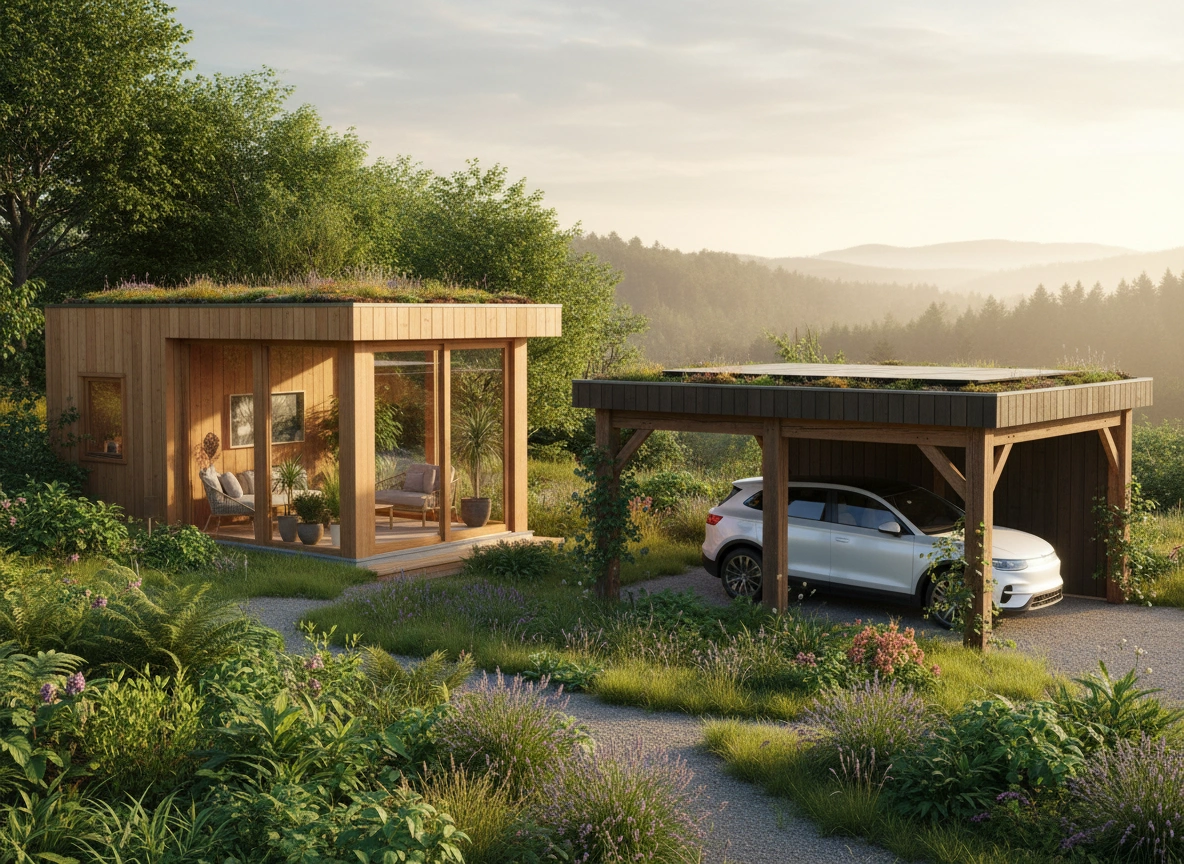
Sustainability is no longer a buzzword; it is the driving force behind modern architecture and home improvement. As homeowners and builders alike search for materials that reduce environmental impact without sacrificing beauty or durability, timber has re-emerged as the champion of green construction.
Wood is ancient, yet it remains one of the most technologically advanced materials available to us. It locks away carbon, renews itself naturally, and offers an aesthetic warmth that concrete and steel simply cannot match. From small backyard additions to essential vehicle shelters, timber structures are reshaping how we utilize our living spaces.
This article explores why timber is the superior choice for eco-conscious construction, examining its application in everything from carports to garden rooms, and why insulation plays a critical role in maximizing these benefits.
The Carbon Case for Timber
When we talk about eco-friendly building, the conversation often starts with carbon. Traditional construction materials like concrete and steel are carbon-intensive. The production of cement alone accounts for a significant chunk of global CO2 emissions. Timber, conversely, flips this narrative on its head.
Trees absorb carbon dioxide as they grow. When that tree is harvested and turned into lumber for a structure, that carbon remains sequestered within the wood for the lifespan of the building. This makes timber a carbon-negative material in many contexts. Choosing wood for your home projects isn’t just about using less energy; it’s about actively storing carbon that would otherwise be in the atmosphere.
Furthermore, the processing of timber requires significantly less energy—embodied energy—than the smelting of steel or the firing of bricks. Sawmills often run on biomass energy generated from their own waste products like bark and sawdust, creating a closed-loop system that further minimizes the ecological footprint.
Versatility in Design: More Than Just a Shed
The beauty of timber lies in its adaptability. It can be cut, shaped, and joined to fit almost any architectural vision. This versatility is particularly evident in two popular outdoor structures: garden rooms and carports.
The Modern Garden Room
Gone are the days when a wooden outbuilding was just a place to store rusty lawnmowers. Today, timber garden rooms are sophisticated extensions of the home. They serve as home offices, art studios, gyms, or peaceful retreats.
Because timber is lightweight yet strong, these structures can often be erected quickly and with minimal disruption to the surrounding landscape. They don’t require the heavy, deep foundations that brick buildings do, preserving the root systems of nearby trees and maintaining soil health.
The Timber Carport
While often overlooked, the carport is an essential structure for many households. Metal carports can look industrial and cold, often clashing with the natural environment of a garden. A timber carport, however, blends seamlessly with the landscape. It provides essential protection for vehicles against sun, rain, and snow, extending the life of your car while enhancing the curb appeal of your property.
Timber allows for open, airy designs that don’t block light or create a “heavy” visual presence on your driveway. Whether you prefer a rustic oak frame or a sleek, modern softwood design, timber offers a structural flexibility that rigid metal frames struggle to replicate.
Aesthetic and Biophilic Benefits
We cannot discuss timber without mentioning its profound impact on human well-being. This is where the concept of “biophilic design” comes into play—the idea that humans have an innate need to connect with nature.
Surrounding ourselves with natural materials like wood has been shown to lower stress levels, improve mood, and even boost productivity. A sterile, concrete box feels very different from a room clad in warm, aromatic pine or cedar.
Visual Warmth
Timber ages gracefully. While plastic becomes brittle and discolored, and metal rusts or dents, wood develops a patina. It settles into its environment. A timber structure in a garden doesn’t look like an alien intrusion; it looks like it belongs there. This visual harmony is crucial for garden rooms, which are meant to be sanctuaries bridging the gap between indoors and outdoors.
Sensory Experience
Wood engages the senses. It has a texture that invites touch, a smell that evokes the forest, and acoustic properties that soften sound. In a home office situated in a garden room, these qualities contribute to a quieter, calmer working environment, free from the harsh echoes typical of drywall and glass boxes.
The Critical Role of Insulation
While the structural frame is vital, the performance of a timber building depends heavily on how it is insulated. Wood itself is a natural insulator—it has millions of tiny air pockets within its cellular structure that slow the transfer of heat. This makes it naturally more thermally efficient than steel or concrete. However, for a structure to be truly usable year-round, additional insulation is key.
This is particularly true for habitable spaces. An Insulated Garden Room transforms a seasonal wooden shelter into a fully functional part of your home. Proper insulation in the walls, floor, and roof ensures that the space remains warm in the winter and cool in the summer.
reducing Energy Consumption
From an eco-friendly perspective, insulation is non-negotiable. A poorly insulated room requires massive amounts of energy to heat or cool, negating the sustainable benefits of the timber frame. By investing in high-quality insulation, you reduce the operational carbon footprint of the building. You use less electricity for heaters or air conditioning units, saving money and reducing strain on the grid.
Longevity and Protection
Insulation also protects the timber structure itself. By managing moisture levels and preventing condensation—which can occur when warm air hits cold surfaces—insulation helps prevent rot and mold growth. This extends the lifespan of the building, ensuring that the resources used to build it serve their purpose for decades.
Sustainable Sourcing: The Responsibility of the Buyer
The “eco-friendly” label on timber is contingent on one major factor: sourcing. Not all wood is created equal. For timber to be truly sustainable, it must come from managed forests where trees are replanted at a rate that exceeds harvest.
When planning a timber project, it is imperative to look for certification labels such as FSC (Forest Stewardship Council) or PEFC (Programme for the Endorsement of Forest Certification). These certifications guarantee that the wood was harvested legally and sustainably, respecting biodiversity and the rights of local communities.
Using fast-growing softwoods like spruce or pine, which can be harvested and replenished relatively quickly, is often more sustainable for general construction than using slow-growing hardwoods, unless those hardwoods are reclaimed or strictly managed.
Durability and Maintenance
A common misconception is that timber is fragile or high-maintenance compared to synthetic alternatives. While wood does require care, modern treatments and construction methods have vastly improved its durability.
Natural Durability
Many species, such as Cedar and Larch, contain natural oils and resins that make them resistant to rot, fungi, and insect attacks without the need for harsh chemical treatments. These woods weather to a beautiful silver-grey over time and can last for decades.
Engineered Timber
Technologies like Cross-Laminated Timber (CLT) and Glulam (glued laminated timber) are revolutionizing construction. These engineered wood products are stronger and more stable than traditional lumber, allowing for larger spans and taller structures that were previously only possible with steel. They resist warping and shrinking, providing a long-lasting framework for your garden room or carport.
Conclusion
Choosing timber for your next outdoor project is a statement of intent. It demonstrates a commitment to sustainability, a respect for natural materials, and an appreciation for design that harmonizes with the environment.
Whether you are building a shelter for your vehicle or a sanctuary for your work, timber offers a solution that is carbon-conscious, aesthetically pleasing, and remarkably functional. By combining sustainable sourcing with high-quality construction—and crucially, ensuring you choose an insulated design for habitable spaces—you create a structure that benefits not just your lifestyle, but the planet as well.
As we look toward a greener future, the answer to our building needs might just be growing in the forest.
