
Walking into a dispensary or browsing an online menu for the first time can feel a little like reading a foreign language. Indica, sativa, terpenes, THC percentages, weird strain names like “Blue Dream” or “Girl Scout Cookies”—it’s a lot to take in. If you’ve ever stared at a strain guide and felt your eyes glaze over, you’re not alone.
The good news? You don’t need to be an expert to make smart choices. With a little background, those guides become genuinely useful tools instead of confusing walls of text. Let’s break it all down step by step.
What Are Cannabis Strain Guides?
A strain guide is simply a resource that describes different cannabis varieties. Think of it as a menu paired with a review section. Each entry usually tells you what type of plant it is, its chemical makeup, the effects people commonly report, and how it tastes or smells.
These guides exist because cannabis isn’t one-size-fits-all. Different strains produce very different experiences. One might leave you relaxed and ready for sleep, while another sparks creativity and energy. A good guide helps match the right product to what you’re actually looking for.
You’ll find them everywhere now—on dispensary websites, dedicated platforms, and product packaging. Online resources like cannabis strain guides pull together detailed information so beginners can compare options without guessing.
Why Strain Guides Matter for Beginners
When you’re new, the stakes feel higher. You don’t want to pick something that’s too strong or that gives you the opposite effect of what you hoped for. Strain guides take some of that uncertainty out of the equation.
They help you:
- Set realistic expectations before you buy
- Avoid products that don’t fit your goals
- Learn the vocabulary used across the industry
- Shop with confidence instead of relying on a budtender’s quick suggestion
Keep in mind that cannabis laws vary widely across the United States. What’s legal in California or Colorado may be restricted in another state. Always check your local regulations before purchasing, and only buy from licensed, compliant retailers.
Understanding Common Terminology
Most of the confusion comes from the jargon. Once you understand a handful of key terms, the rest falls into place quickly.
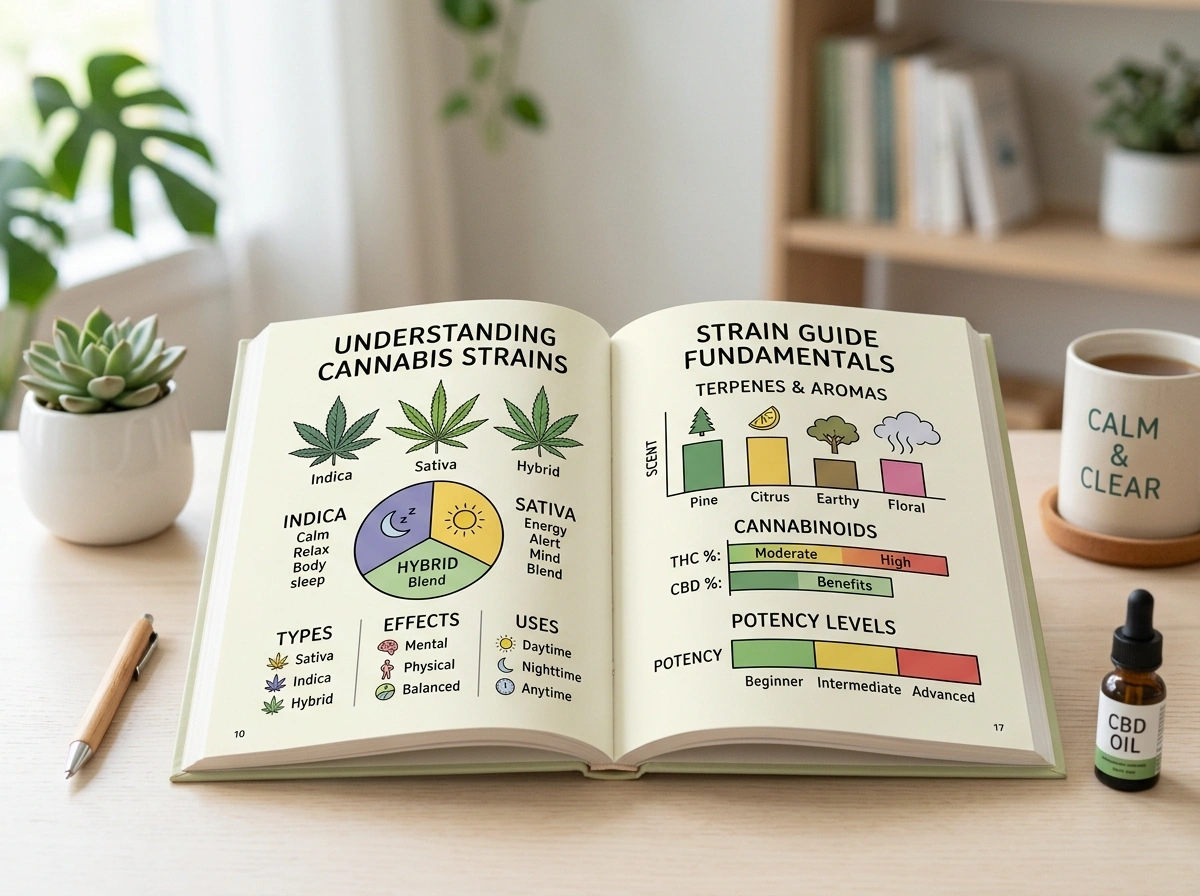
Indica, Sativa, and Hybrid
These three words describe the general category of a plant.
- Indica strains are often linked with relaxation, body-heavy effects, and nighttime use. People reach for them to unwind or sleep.
- Sativa strains tend to feel more energizing and uplifting, making them popular for daytime activities or social settings.
- Hybrid strains blend traits of both. Many modern strains are hybrids, leaning slightly toward one side or the other.
A quick note: experts increasingly say these categories are loose generalizations. The actual chemical makeup of a strain matters more than the label. Still, indica and sativa remain a handy starting point for beginners.
THC and CBD
These are the two best-known compounds, called cannabinoids.
- THC is the part responsible for the “high.” Higher THC percentages generally mean stronger psychoactive effects. Beginners often do well starting with lower numbers.
- CBD doesn’t produce a high. Many people use it for a calmer, more balanced feel. Strains high in CBD and low in THC are popular among those who want benefits without intense intoxication.
You’ll usually see these listed as percentages. A product labeled “20% THC” is fairly potent, while something in the 5–10% range is gentler.
Terpenes
Terpenes are the natural compounds that give each strain its smell and flavor—think citrus, pine, earth, or berry. Beyond aroma, many people believe terpenes shape the overall experience. For example, the terpene myrcene is often associated with relaxation, while limonene is linked to a brighter mood.
You don’t need to memorize them all. Just know that terpenes explain why two strains with similar THC levels can still feel different.
Effects
This section of a guide describes what people typically feel: relaxed, happy, focused, sleepy, creative, and so on. Guides may also note common uses, such as easing stress or supporting sleep. Treat these as general patterns, not guarantees—everyone’s body reacts a little differently.
How to Interpret Strain Ratings and Reviews
Ratings and reviews add a human layer to the technical data. They tell you what real people experienced, which can be more relatable than a percentage.
Here’s how to read them wisely:
- Look at the volume of reviews. A strain rated five stars by three people is less reliable than one rated 4.3 stars by hundreds.
- Read for patterns, not outliers. If dozens of reviewers mention the same effect, that’s a strong signal. One person’s extreme reaction usually isn’t.
- Watch for context. A reviewer’s tolerance, dosage, and reason for use all shape their opinion. Their experience may not match yours.
- Be skeptical of perfect scores. Genuine reviews include both pros and cons.
Reviews work best as a supplement to the factual data, not a replacement for it.
Tips for Narrowing Down the Right Strain
With thousands of strains out there, the trick is filtering rather than browsing endlessly. Start with your goal and work backward.
- Define what you want. Are you looking to relax, sleep, focus, or socialize? Your goal points you toward indica, sativa, or hybrid.
- Set a THC comfort level. New users often start in the lower-to-moderate range to avoid feeling overwhelmed.
- Consider CBD content. If you want a milder experience, a balanced THC-to-CBD ratio can help.
- Match the effects list to your needs. Cross out anything that lists effects you’d rather avoid.
- Check a couple of trusted reviews. Confirm that real-world feedback lines up with the listed effects.
Following these steps turns a giant list into a short, manageable shortlist.
How to Avoid Information Overload
It’s easy to fall down a rabbit hole of data. Here’s how to keep things simple and stress-free.
- Focus on three things first: type (indica/sativa/hybrid), THC level, and listed effects. That’s enough to make a solid beginner choice.
- Don’t chase the strongest option. Higher THC isn’t better for everyone, especially at the start.
- Take notes. Jot down what you try and how it felt. Over time, your own notes become the best guide you’ll ever have.
- Go slow. Start with a small amount, wait, and see how you feel before more.
- Use one or two reliable sources. Bouncing between a dozen websites only adds confusion.
Remember, you can always learn more later. There’s no need to absorb everything in one sitting.
Final Thoughts
Reading a cannabis strain guide doesn’t have to be intimidating. Once you understand the basics—plant types, THC and CBD, terpenes, and effects—those once-confusing menus start to make perfect sense. Pair that knowledge with a quick look at ratings and a clear sense of your own goals, and you’re well equipped to choose with confidence.
Take it one step at a time, lean on trusted resources, and pay attention to how your own body responds. Before long, you’ll move through any strain guide like a seasoned pro. And as always, shop legally, buy from licensed sources, and enjoy responsibly.
