

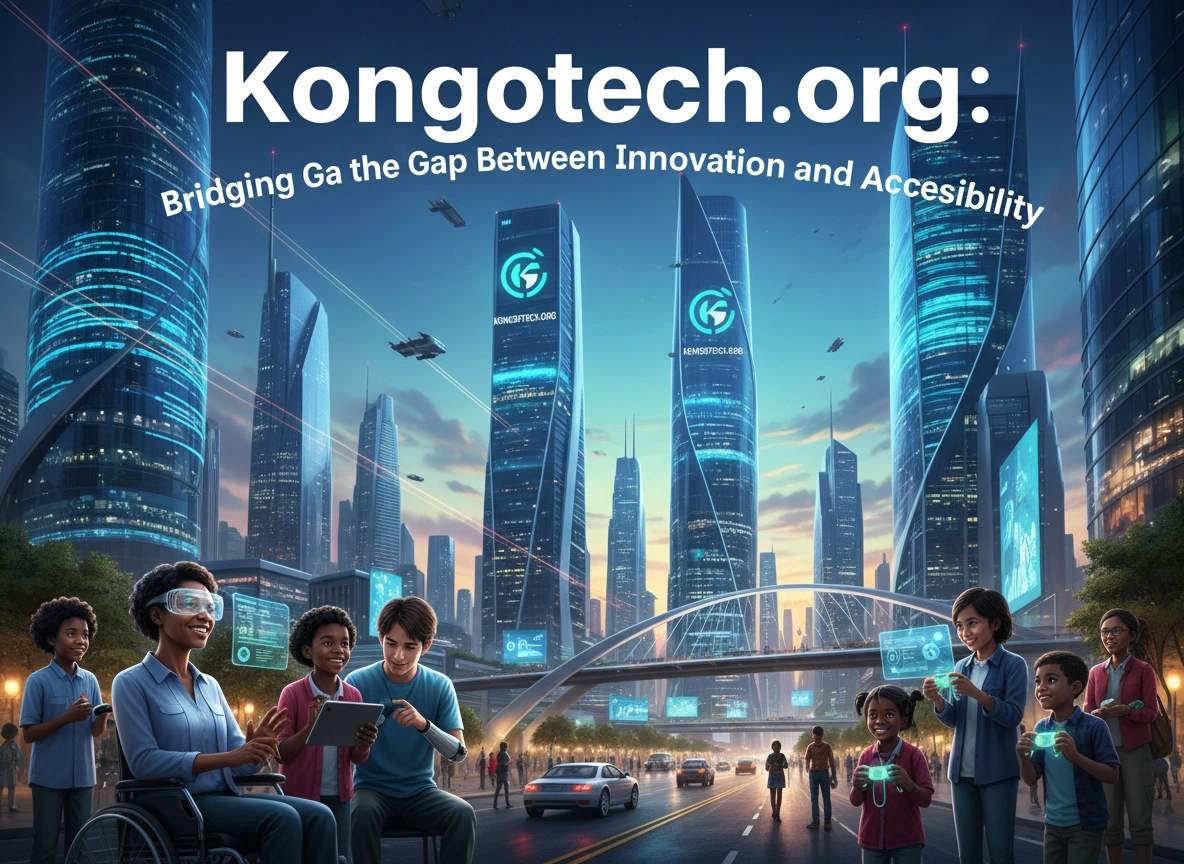
Technology advances at a breakneck speed. New gadgets, faster processors, and smarter algorithms emerge daily, promising to revolutionize how we live and work. Yet, a significant portion of the global population watches from the sidelines. The digital divide remains a stubborn barrier, separating those who can leverage these innovations from those who cannot. This is where organizations like Kongotech.org step in. By positioning themselves at the critical intersection of high-level innovation and grassroots accessibility, Kongotech.org is rewriting the narrative of who gets to participate in the digital future.
This article explores the mission and impact of Kongotech.org. We will examine how they dismantle barriers for underserved communities, the specific innovative solutions they deploy, and the tangible difference they are making in lives around the world.
The Reality of the Digital Divide
Before understanding the solution, we must understand the problem. The digital divide is not just about who owns a smartphone. It encompasses a lack of reliable internet infrastructure, a deficit in digital literacy skills, and the prohibitive cost of modern software and hardware.
For many communities in developing regions or economically disadvantaged areas within developed nations, “innovation” feels like an abstract concept. It is something that happens elsewhere, for other people. This exclusion has real-world consequences:
- Economic Stagnation: Without access to digital marketplaces or remote work tools, local economies cannot compete globally.
- Educational Deficits: Students without internet access fall behind peers who have a wealth of information at their fingertips.
- Healthcare Disparities: Telemedicine and health-tracking apps remain out of reach for those who might need them most.
Kongotech.org operates on the philosophy that technology is a universal right, not a luxury privilege. Their work focuses on turning the potential of tech into a practical reality for everyone.
Democratizing Access Through Infrastructure
One of the primary pillars of Kongotech.org’s strategy is infrastructure development. You cannot use software if you cannot connect to the internet. Kongotech.org tackles this through a multi-faceted approach that prioritizes durability and cost-effectiveness.
Solar-Powered Connectivity Hubs
In regions where the electrical grid is unreliable or non-existent, traditional routers are useless. Kongotech.org has pioneered the deployment of Solar-Powered Connectivity Hubs. These robust, standalone units capture solar energy during the day to power satellite internet receivers and local Wi-Fi mesh networks.
These hubs do more than provide a signal; they become community centers. In rural villages across Sub-Saharan Africa, for example, a single hub can connect a school, a clinic, and a local market. This approach solves the “last mile” problem of internet connectivity without waiting for massive government infrastructure projects to catch up.
Low-Bandwidth Optimization
Accessibility isn’t just about hardware; it’s about data. In many underserved areas, data is expensive. Modern websites and apps are often bloated with high-resolution images and auto-playing videos that drain data plans instantly.
Kongotech.org develops and promotes “lite” versions of essential software. They work with developers to optimize code for low-bandwidth environments. Their proprietary compression algorithms allow users to access educational materials and agricultural data using a fraction of the bandwidth typically required. This innovation ensures that once a user connects, they can actually afford to stay online.
Innovation in Education: The “Classroom in a Box”
Education is perhaps the most powerful tool for breaking the cycle of poverty. Kongotech.org recognized that while they couldn’t build brick-and-mortar schools everywhere, they could bring the school to the students.
The Hardware Solution
The “Classroom in a Box” initiative is one of their flagship programs. It involves a rugged, weather-resistant case containing:
- 30 low-cost, energy-efficient tablets.
- A localized server pre-loaded with thousands of educational resources (Wikipedia offline, Khan Academy, local curriculum books).
- A solar charging system.
Because the content is stored locally on the server, students do not need a live internet connection to access lessons. They connect to the local server via the tablets, allowing for a rich digital learning experience in the middle of a remote rainforest or a desert encampment.
Empowering Educators
Hardware alone does not educate a child. Kongotech.org places a heavy emphasis on teacher training. They provide workshops that teach educators not just how to use the devices, but how to integrate digital tools into their pedagogy. This ensures that the technology amplifies the teacher’s impact rather than becoming a distraction.
Reports from pilot programs in Southeast Asia show a 40% increase in student engagement and a significant improvement in literacy rates within just one year of implementation.
Economic Empowerment Through Fintech
Innovation reaches its peak utility when it helps people put food on the table. For many unbanked populations, financial exclusion prevents them from saving money securely or accessing credit to start businesses.
Kongotech.org has partnered with local fintech startups to develop blockchain-based micro-ledger systems. These systems allow users to create a verifiable financial identity using simple feature phones (dumbphones) via SMS or USSD codes.
Secure Micro-Transactions
By leveraging blockchain technology, these transactions are secure and transparent, reducing the risk of fraud which often plagues informal banking sectors. Farmers can receive payments instantly for their crops, and artisans can sell their goods to a broader market without needing a traditional bank account.
The “Micro-Grant” Platform
Beyond just banking, Kongotech.org facilitates a direct-to-beneficiary micro-grant platform. Donors from around the world can fund specific small business projects—a sewing machine for a tailor in Peru or seeds for a farmer in Kenya. The platform tracks the deployment of funds, ensuring transparency. This direct injection of capital, facilitated by tech, bypasses bureaucratic hurdles and puts resources directly into the hands of innovators on the ground.
Assistive Technology for the Disabled
A crucial, often overlooked aspect of accessibility is designing for those with physical disabilities. In low-resource settings, a disability can lead to complete social isolation. Kongotech.org creates open-source designs for assistive devices that can be manufactured locally using 3D printing.
3D-Printed Prosthetics
Traditional prosthetics cost thousands of dollars. Kongotech.org maintains a repository of 3D-printable prosthetic designs that can be customized and printed for under $50. By equipping local makerspaces with 3D printers and the necessary training, they empower communities to build their own medical devices.
Voice-to-Text for Local Dialects
Standard voice recognition software supports major global languages but ignores thousands of local dialects. Kongotech.org is crowdsourcing voice data to build open-source speech-to-text engines for underrepresented languages. This allows individuals with motor impairments or visual disabilities to interact with technology using their native tongue, opening up new worlds of communication and independence.
Strategic Partnerships and Sustainability
No organization can tackle these challenges in a vacuum. Kongotech.org’s success lies in its collaborative model. They do not swoop in as saviors; they partner as equals.
- Local Governments: They work with ministries of education and technology to align their programs with national goals, ensuring long-term government support.
- Tech Giants: They partner with major hardware manufacturers to repurpose older corporate technology, diverting e-waste while sourcing powerful devices for their programs.
- Community Leaders: Crucially, every project begins with a community council. Local leaders define the needs, and Kongotech.org provides the technical framework to meet them.
This creates a sustainable ecosystem. When the Kongotech.org team moves to the next project, the local community retains the knowledge, the hardware, and the infrastructure to keep the innovation alive.
The Future of Inclusive Innovation
The work of Kongotech.org serves as a blueprint for the future of the technology sector. It proves that innovation is not just about making the fastest car or the thinnest phone. True innovation is about solving the hardest problems for the people who have the fewest resources.
As we move forward, the gap between the digital “haves” and “have-nots” threatens to widen with the advent of AI and automation. Organizations like Kongotech.org act as a vital counterweight. They ensure that as humanity leaps forward, we build bridges behind us, ensuring no one is left stranded on the wrong side of the divide.
Through solar hubs, offline classrooms, inclusive fintech, and assistive devices, Kongotech.org demonstrates that accessibility is not an afterthought—it is the very engine of meaningful progress.
