

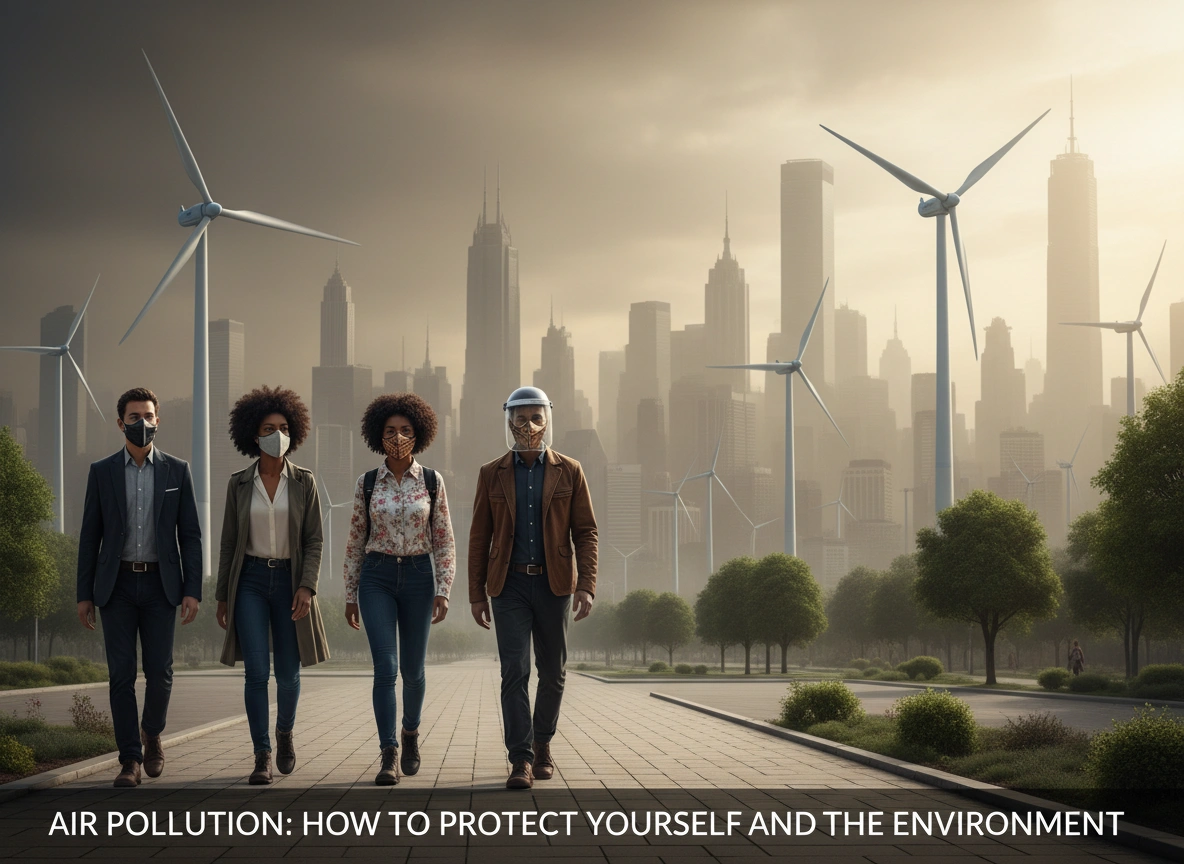
Air pollution isn’t just a distant problem seen in smoggy photos of industrial cities. It is an invisible threat present in our daily lives, affecting the air we breathe in our homes, workplaces, and neighborhoods. According to the World Health Organization (WHO), almost the entire global population (99%) breathes air that exceeds air quality limits and threatens their health.
While the statistics are alarming, they should serve as a catalyst for action rather than a cause for despair. Understanding the mechanics of air pollution empowers us to make smarter decisions for our personal health and the planet’s future. This article explores the root causes of air quality issues, actionable strategies to shield your health, and the collective steps we must take to clear the air for everyone.
Understanding the Invisible Threat
Before we can effectively protect ourselves, we need to understand what we are fighting. Air pollution consists of chemicals or particles in the air that can harm the health of humans, animals, and plants. It also damages buildings and creates visibility issues.
The Primary Culprits
Pollutants generally fall into two categories: particulate matter and gases.
- Particulate Matter (PM): These are tiny particles of solid or liquid suspended in a gas. PM2.5 (fine particles) are particularly dangerous because they can penetrate deep into lung passageways and enter the bloodstream. Common sources include vehicle exhaust, wood burning, and industrial emissions.
- Ground-Level Ozone: Unlike the protective ozone layer high in the atmosphere, ground-level ozone is a harmful pollutant created by chemical reactions between oxides of nitrogen (NOx) and volatile organic compounds (VOCs). This happens when pollutants emitted by cars, power plants, and chemical plants chemically react in the presence of sunlight.
- Nitrogen Dioxide (NO2): Getting its start primarily from burning fuels, NO2 forms from emissions from cars, trucks and buses, power plants, and off-road equipment.
The Health and Environmental Toll
The impact on human health is severe. Short-term exposure can irritate the eyes, nose, and throat, and cause upper respiratory infections. Long-term exposure is linked to chronic respiratory diseases like asthma and COPD, heart disease, lung cancer, and even strokes. Children, the elderly, and those with pre-existing conditions are particularly vulnerable.
Environmentally, pollution contributes to acid rain, which damages trees and acidifies soils and water bodies. It also accelerates climate change; many air pollutants are “climate forcers” that trap heat in the atmosphere.
How to Protect Your Health
While we push for systemic change, we must also take immediate steps to safeguard our personal well-being. You cannot stop breathing, but you can control the quality of the air you inhale to a significant degree.
Monitor Air Quality Levels
Knowledge is your first line of defense. Most smartphones now include air quality data in their weather apps, usually expressed as the Air Quality Index (AQI).
- Check Daily: Make checking the AQI part of your morning routine.
- Understand the Scale: An AQI under 50 is good. Over 100 begins to be unhealthy for sensitive groups, and over 150 is unhealthy for everyone.
- Plan Accordingly: If pollution levels are high, shift your morning run to an indoor treadmill or reschedule outdoor activities for a clearer day.
Fortify Your Indoor Environment
Surprisingly, indoor air can often be more polluted than outdoor air. Since we spend about 90% of our time indoors, this is a critical area for intervention.
- Invest in High-Efficiency Air Purifiers: Look for purifiers with HEPA filters, which are certified to capture 99.97% of particles that are 0.3 microns in diameter. Place them in high-traffic areas like the living room and bedroom.
- Ventilation is Key: On days with good outdoor air quality, open windows to circulate fresh air. When cooking, always use exhaust fans to remove smoke and grease particles.
- Keep it Clean: Dust and vacuum frequently using a vacuum cleaner equipped with a HEPA filter. This prevents settled pollutants from becoming airborne again.
Personal Protective Measures Outdoors
When you must be outside during high pollution events—such as during wildfire season or heavy smog days—additional barriers are necessary.
- Wear the Right Mask: Cloth masks offer little protection against fine particulate matter. N95 or KN95 respirators are designed to filter out at least 95% of airborne particles. Ensure the mask fits snugly against your face; gaps render the mask ineffective.
- Avoid High-Traffic Areas: Pollution levels are significantly higher near busy roads and highways. When walking or cycling, choose routes through parks or quiet side streets to minimize direct exposure to vehicle exhaust.
Reducing Your Carbon Footprint
Protecting yourself is defensive; reducing pollution is offensive. Every individual action contributes to the aggregate quality of our air. By making conscious lifestyle changes, we can lower the demand for the processes that create pollution.
Rethink Transportation
Vehicle emissions are a leading source of NO2 and particulate matter.
- Use Public Transit: Buses and trains carry far more people per vehicle than private cars, drastically reducing emissions per passenger.
- Active Commuting: Walking or cycling produces zero emissions and improves cardiovascular health, making you more resilient to pollution’s effects.
- Drive Smarter: If you must drive, combine errands into one trip. Avoid idling your engine; if you are stopped for more than 10 seconds, turn the engine off. Consider switching to a hybrid or electric vehicle if feasible.
Optimize Energy Consumption
Power plants burning fossil fuels are major pollution sources. Reducing your energy use at home directly lowers the demand on these plants.
- Energy-Efficient Appliances: Replace old appliances with Energy Star-rated models that use less electricity.
- LED Lighting: Switch all light bulbs to LEDs, which use up to 75% less energy and last 25 times longer than incandescent lighting.
- Smart Climate Control: Use a programmable thermostat to reduce heating and cooling usage when you aren’t home. Insulate your home properly to prevent energy leaks.
Support Clean Energy Initiatives
Transitioning away from fossil fuels is essential.
- Green Energy Providers: Many utility companies offer options to source your electricity from renewable sources like wind or solar.
- Solar Installation: If you are a homeowner, investigate the feasibility of installing solar panels. Federal and state tax incentives often make this more affordable than it appears initially.
The Role of Government and Organizations
Individual actions are vital, but air pollution is a systemic issue requiring systemic solutions. Governments and large organizations hold the regulatory power and resources to effect massive change.
Regulatory Frameworks and Standards
Governments are responsible for setting and enforcing air quality standards. In the United States, the Clean Air Act has been instrumental in reducing pollution levels since 1970.
- Emissions Caps: Governments set limits on how much pollution industries can release.
- Vehicle Standards: Regulations push automakers to produce cleaner, more efficient engines and accelerate the shift toward electric vehicles.
- Urban Planning: City planners can design “low emission zones” in city centers, prioritize green spaces that act as carbon sinks, and build infrastructure that favors pedestrians and cyclists over cars.
Corporate Responsibility
Corporations are increasingly held accountable for their environmental footprint.
- Supply Chain Sustainability: Forward-thinking companies are demanding greener practices not just in their headquarters, but throughout their manufacturing and shipping supply chains.
- Innovation: Private sector investment drives the technology behind cleaner manufacturing processes, renewable energy storage, and carbon capture technologies.
How You Can Support These Efforts
You have a voice in how these large entities operate.
- Vote and Advocate: Support political candidates who prioritize environmental health and science-based policy. Contact your representatives to demand stricter air quality regulations.
- Vote with Your Wallet: Support businesses that demonstrate a genuine commitment to sustainability. Boycott companies with poor environmental records.
- Join Local Groups: Engage with local environmental advocacy groups. Local action—like planting trees in your neighborhood or lobbying for bike lanes—often yields the fastest tangible results.
Conclusion
Air pollution is a complex challenge that intersects with public health, economic policy, and environmental science. It is easy to feel small against a problem that spans the globe, but apathy is the only true defeat.
By taking defensive measures like monitoring air quality and using purifiers, you protect your immediate health. By altering your transportation and energy habits, you contribute to a cleaner world. And by leveraging your power as a citizen and consumer, you push for the structural changes necessary to solve the crisis.
Clean air is not a luxury; it is a fundamental human right. Protecting it requires a collaborative effort where every action counts. Start today by checking your local AQI, turning off an unnecessary light, or simply having a conversation about air quality. The path to a clearer sky begins on the ground, with us.Check out this site to find useful information.
You may also read: The Carnivore Diet: Pros, Cons, and a Sample Meal Plan
