

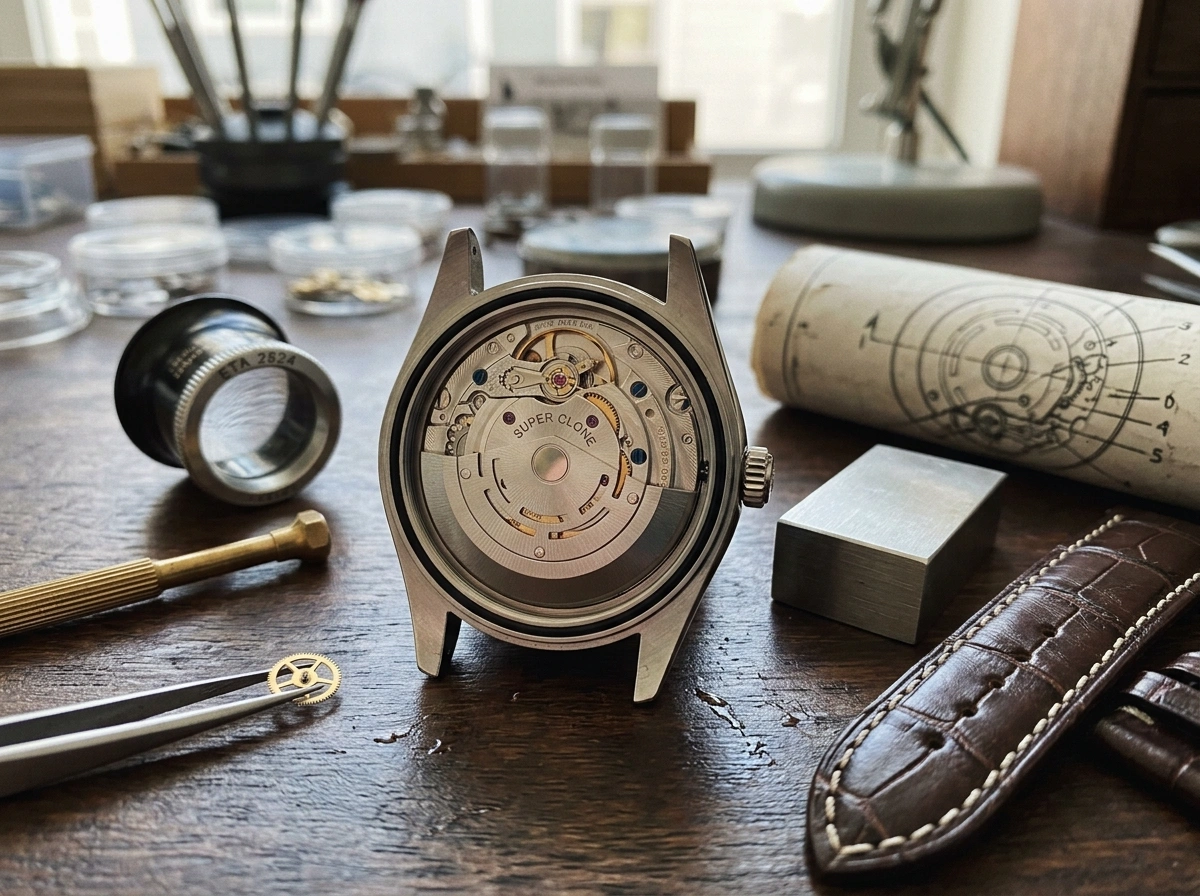
The world of high-end replica watchmaking has changed dramatically over the past decade. What once produced obvious imitations now involves precision tooling, careful metallurgy, and detailed hand-finishing. For collectors and curious readers alike, understanding the craftsmanship behind these timepieces reveals just how far manufacturing has come.
This article breaks down three core areas that define quality in this category: the movements that power the watch, the materials used in the case and bracelet, and the finishing techniques applied throughout. You’ll learn what separates basic copies from carefully built pieces, and why each area demands real technical skill. We’ll keep the focus on the engineering itself rather than the marketplace around it.
Understanding the Category
Before exploring the details, it helps to define what people mean by the term. A high-grade replica aims to mirror the dimensions, weight, and visual character of a luxury reference. The closer the build matches the original specifications, the more demanding the production process becomes.
Quality in this space rests on three pillars: a reliable movement, accurate material selection, and consistent finishing. A watch can excel in one area and fall short in another. The most convincing pieces balance all three. Reference points and comparison galleries, such as those found through resources covering super clone rolex watches, often highlight how these factors interact in a finished product.
Movements: The Heart of the Watch
The movement is the mechanical engine inside the case. It controls timekeeping, powers complications, and largely determines how a watch feels in daily use. This is also where craftsmanship is hardest to fake.
Movement Architecture
Higher-tier replicas often use movements designed to match the layout of the original caliber. This includes the placement of the rotor, the bridges, and the gear train. Matching the architecture matters because it affects the date wheel position, the smoothness of the seconds hand, and the overall thickness of the watch.
A movement built to mirror an in-house caliber must replicate several details:
- Beat rate, which influences how the seconds hand sweeps
- Power reserve, or how long the watch runs on a full wind
- Rotor design, including its decoration and winding direction
- Date mechanism alignment, so the date sits correctly in the window
When these elements line up, the watch behaves more like the reference it imitates.
Accuracy and Stability
Timekeeping accuracy depends on the balance wheel, hairspring, and escapement working in harmony. Better movements use refined regulation to keep daily variance within a tighter range. Stability over time, however, depends on build quality and lubrication.
The “so what” here is simple: a movement may look correct through a display case-back, yet long-term reliability comes down to the actual components and assembly precision. Visual accuracy and mechanical endurance are two different challenges.
Materials: Case, Crystal, and Bracelet
Materials shape how a watch looks, feels, and ages. Weight, color tone, and surface behavior all trace back to the metals and minerals used in construction.
Case and Bracelet Metals
Many quality pieces use 316L stainless steel, while higher-end builds may use 904L stainless steel, which offers greater corrosion resistance and a slightly different polish character. The grade of steel affects both durability and the way light reflects off polished surfaces.
Key material considerations include:
- Steel grade, which influences weight and shine
- Coating quality on gold-tone or two-tone models
- Gasket and seal materials, which affect water resistance
- Bracelet construction, including link solidity and clasp engineering
A solid bracelet with properly machined links feels substantially different from a hollow one. This is one of the quickest ways to judge overall material quality.
Crystal and Bezel
Sapphire crystal is the standard for scratch resistance on better pieces. Some include an anti-reflective coating to reduce glare. The bezel material varies by model. Ceramic bezels, for example, require precise molding and color consistency, especially on two-tone designs where alignment is unforgiving.
The payoff for using quality materials is twofold: the watch resists daily wear, and it maintains a convincing appearance under close inspection.
Finishing: Where Detail Becomes Visible
Finishing covers every surface treatment applied to the case, bracelet, dial, and movement. This is the stage where careful work separates an average build from an impressive one.
Surface Work
Luxury watches combine multiple finishing styles on a single case. A well-executed piece replicates these transitions:
- Brushed surfaces with consistent grain direction
- Polished surfaces that are clean and free of waviness
- Sharp edges where brushed and polished sections meet
The crispness of these transitions tells you a lot. Sloppy boundaries between finishes are a common giveaway, while clean lines reflect patient tooling and quality control.
Dial and Hand Details
The dial is the most studied part of any watch. Finishing here includes the printing sharpness, the application of indices, and the luminous material on hands and markers. Applied indices that sit evenly and catch light correctly signal strong attention to detail.
Hands deserve equal attention. Their length, taper, and luminous fill all contribute to the overall impression. Even small misalignments become obvious under magnification.
Movement Decoration
For watches with a transparent case-back, movement decoration becomes part of the finishing story. This may include perlage, striping, and a decorated rotor. While decoration is largely cosmetic, it reflects the level of effort invested in the build and how closely it mirrors the reference caliber.
Key Takeaways
- Movements determine how the watch performs and feels; architecture, accuracy, and stability all matter.
- Materials like steel grade, sapphire crystal, and ceramic bezels affect durability and appearance.
- Finishing reveals craftsmanship through clean surface transitions, sharp dial details, and movement decoration.
- The strongest builds balance all three areas rather than excelling in just one.
- Close inspection of bracelet weight, edge crispness, and dial printing offers quick quality signals.
Conclusion
The craftsmanship behind these timepieces spans engineering, metallurgy, and meticulous hand-finishing. A convincing build is never the result of a single feature. Instead, it comes from the interaction of a well-built movement, carefully chosen materials, and disciplined finishing work.
For anyone studying this category, the practical next step is to evaluate watches across all three dimensions rather than focusing on appearance alone. Examine how the bracelet feels, how the finishes transition, and how the movement behaves over time. That balanced assessment offers the clearest picture of true quality.
